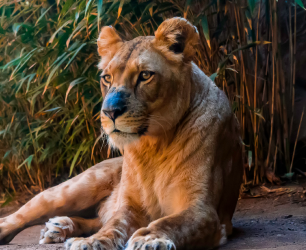
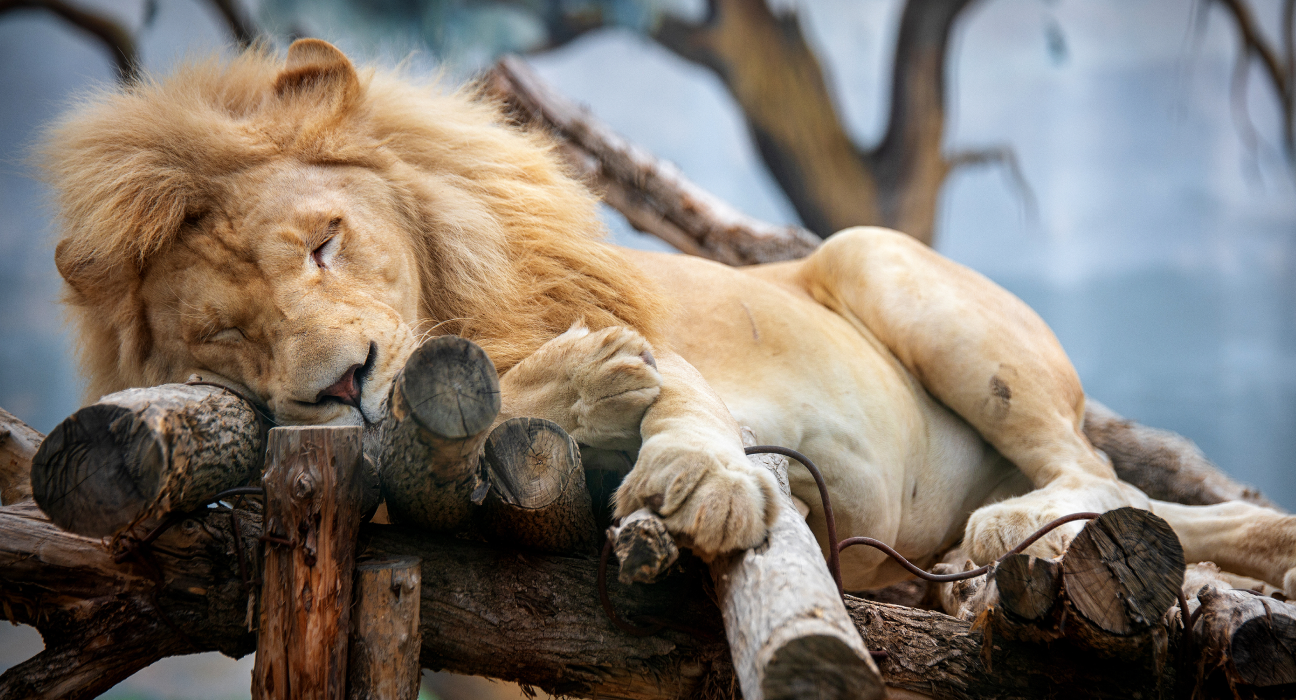

Two distinctive features set lions apart from all other wild cats. First, they are social felines while other cats are typically solitary in the wild. Second, they are the only cats to exhibit a physical distinction between males and females— males have a mane.
Lions live in prides of between four to 37 cats. Prides usually consist of a core four to 12 related adult females, their offspring and one to six adult males. In the pride, females do most of the hunting, when they work together to form an ambush.
In Africa, the preferred prey of the lion is wildebeest, impala, zebras, buffalo and warthogs. At the Zoo, their diet includes a commercial raw meat mix, solid beef, beef shank bones and beef long bones. These bones provide enrichment for the lions and helps them strengthen their jaws.
You may remember when this subspecies was once called "Siberian tigers" years ago. In 1984, the name was changed to better reflect where they live in the wild since their geographic range has been drastically reduced. Amur tigers are found in far eastern Russia, with a few surviving in northeastern China and possibly North Korea. This type of tiger is now named for the Amur River, which forms the border between far eastern Russia and northeastern China.
Connect with our animals, then connect with a bigger mission. Learn more about how we work to enlighten people about conservation issues and save wildlife across the globe. The tigers’ famous stripes help them to camouflage themselves from their prey while hunting. No two tigers have the same stripe pattern. Just as humans can be identified through their own unique fingerprints, tigers can be identified by their individual stripe patterns.